Ep 187 - The Thinking Being: The Transformative Power of Thought
Psychology and Spirituality | The Thinking Being: The Transformative Power of Thought With Marcia Trajano and Peter Hays Have you ever wondered about the power of thought? Today we will explore a reflection from Joanna de Ângelis around the notion of The Thinking Being. What is thought? How does it shape our emotions, relationships, and destiny? Can thought become a source of healing — or suffering? This theme is extraordinarily relevant because thought is not merely a mental process — it is the organizing force of consciousness itself. Joanna de Ângelis presents thought as one of the greatest treasures of human evolution. Thought is not passive. It creates internal realities, influences emotional states, affects the body, shapes relationships, and directs spiritual growth. Modern neuroscience, cognitive psychology, philosophy, and spiritual traditions increasingly converge around the understanding that what we repeatedly think becomes deeply integrated into who we are. Signals of emotional overload. Psychological conflict. And in some cases… a profound inner fragmentation of the self. In today’s episode, we explore what Joanna de Ângelis describes as “deep disorders”—not to replace science, but to expand our understanding of the human being. Because sometimes… the mind is not malfunctioning. Sometimes… it is expressing what the soul cannot hold anymore. References: • The Awakening of the Spirit - Joanna de Angelis | Divaldo Pereira Franco • The Gospel According to Spiritism - Allan Kardec • The Spirits' Book - Allan Kardec Inspirations: • Alfred Binet and Théodore Simon Alfred Binet and Théodore Simon were French psychologists who developed the first practical intelligence test in the early 1900s. Commissioned by the French government to identify schoolchildren needing academic support, they created the Binet-Simon Scale. • Howard Gardner Howard Gardner is an American developmental psychologist and professor at Harvard University, best known for proposing the Theory of Multiple Intelligences in 1983. He challenged the traditional view that intelligence is a single general ability measured by IQ tests. Instead, Gardner proposed that humans possess several distinct intelligences, such as linguistic, logical-mathematical, spatial, musical, bodily-kinesthetic, interpersonal, intrapersonal, and later naturalistic intelligence. • Max Scheler Max Scheler was a German philosopher associated with phenomenology and philosophical anthropology. He made major contributions to the understanding of feelings by arguing that emotions are not merely subjective or irrational states, but a form of intentional awareness that reveals values in the world. For Scheler, feelings are structured and hierarchical, ranging from sensory pleasure to spiritual and moral emotions. • Norman Doidge - that brain that changes itself Norman Doidge is a Canadian psychiatrist, psychoanalyst, and author best known for popularizing the concept of neuroplasticity—the brain’s ability to change and reorganize itself throughout life. • Paul McLean Paul D. MacLean was an American neuroscientist best known for developing the theory of the “triune brain.” He proposed that the human brain evolved in three layers: the reptilian brain (instinct and survival), the limbic system (emotion and memory), and the neocortex (reasoning and higher cognition). MacLean’s model helped popularize the connection between emotion, behavior, and brain evolution, influencing psychology, psychiatry, education, and spiritual discussions about human consciousness. • Sigmund Freud Sigmund Freud revolutionized the understanding of feelings by showing that emotions are deeply influenced by unconscious processes. He proposed that many feelings arise from repressed desires, conflicts, and early childhood experiences, often outside conscious awareness. Through psychoanalysis, Freud demonstrated how anxiety, guilt, and defense mechanisms shape emotional life. • William Stern William Stern was a German psychologist and philosopher known for major contributions to the study of intelligence and personality. He introduced the concept of the Intelligence Quotient (IQ), proposing that intellectual ability could be measured by comparing mental age to chronological age. This episode is presented by: • Mansão de Caminho - https://mansaodocaminho.com.br • United States Spiritist Federation - https://spiritist.us • International Spiritist Council - https://cei-spiritistcouncil.com • AME Brasil - https://amebrasil.org.br #JoannadeAngelis #PsychologyAndSpirituality #peterhays #MarciaTrajano #divaldopereirafranco #Spiritism #InnerGrowth #Spirituality #PaulMacLean #triunebrain #sigmundfreud #normandoidge #friedrichnietzche #williamstern #maxscheler #howardgardner #AlfredBinet #TheodoreSimon 🎙️ New to streaming or looking to level up? Check out StreamYard and get $10 discount! 😍 https://streamyard.com/pal/d/5001313440497664
Vídeos relacionados

Divaldo Franco orienta o que devemos fazer nos momentos difíceis
Mansão do Caminho · Divaldo Pereira Franco

Bezerra de Menezes traz mensagem de esperança através de Divaldo Franco
Mansão do Caminho · Divaldo Pereira Franco

Médium Divaldo Franco relata comunicação de um espírito suicida para os pais ateus
Mansão do Caminho · Divaldo Pereira Franco

Divaldo fala sobre o coronavírus
Mansão do Caminho · Divaldo Pereira Franco

Divaldo Franco narra a impressionante história do médico defensor da Eutanásia.
Mansão do Caminho · Divaldo Pereira Franco

AO VIVO: Divaldo Franco fala sobre Bezerra de Menezes
Mansão do Caminho · Divaldo Pereira Franco
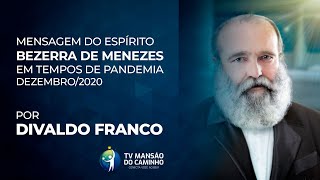
Mensagem mediúnica do Espírito Bezerra de Menezes - psicografada pelo médium Divaldo Franco
Mansão do Caminho · Divaldo Pereira Franco

Mensagem de alerta de Divaldo Franco - seja paciente!
Mansão do Caminho · Divaldo Pereira Franco